
When a chimney starts letting water in, brickwork gets the blame more often than it deserves. In practice, a large proportion of chimney leaks come down to the lead detailing around the base of the stack rather than the masonry itself, and putting that right is usually a more precise job than it looks from the ground.
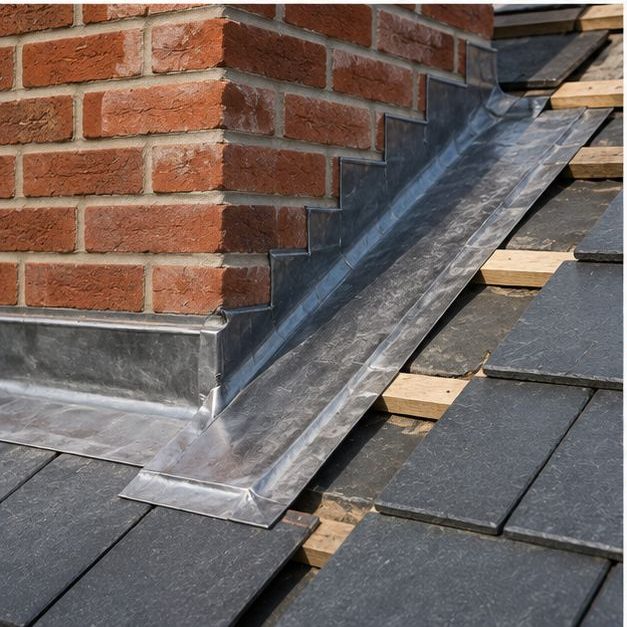
Lead flashing is fitted where the chimney meets the roof slope, dressed into the brick joints on one side and lapped over the roof covering on the other, to create a weatherproof seal at what is otherwise a vulnerable junction. Soakers do similar work at a smaller scale, tucked under each course of tiles or slates alongside the stack. Both rely on being correctly formed and properly maintained, and both can fail quietly, through cracking, lifting at the edges, or simply working loose over years of thermal movement as the lead expands and contracts.
On the upslope side of a wider chimney, a back gutter carries water round the stack rather than letting it pool against the brickwork, and it's an area worth checking specifically if a leak seems to coincide with heavy rain rather than everyday weather. Debris collecting in a back gutter, or lead that has split at a fold, can send water into the roof space with surprising speed.
One of the trickier parts of diagnosing a chimney leak is that the point where water appears inside the house is not always directly below where it's getting in outside. Water can track along a rafter or run down the inside face of a chimney breast for some distance before showing itself as a stain on a ceiling or wall. This is particularly relevant on the taller, older stacks found on many properties in Arnos Vale, where there's simply more lead detailing and more distance for water to travel before it becomes visible.
It's also worth having leadwork looked at periodically even if there's no visible leak yet, rather than waiting for water to actually appear indoors. A brief check during a wider roof inspection can catch lead that's starting to lift or crack while it's still an easy repair, well before it develops into the kind of failure that causes internal damp and, potentially, damage to ceilings or timber below. The lead used also has to be right for the job, not just any offcut that happens to be to hand. Thicker codes of lead are used for wider flashing runs and back gutters that carry more water, while lighter codes suit smaller soaker details, and getting this mismatched can mean a repair that looks correct but doesn't hold up to the volume of water actually passing over it during heavy rain. This is one of the reasons a proper leadwork repair is worth having done by someone who works with it regularly, rather than treated as a generic patching job.
Repairing failed leadwork properly usually means replacing the affected sections with new lead dressed correctly into the brickwork, rather than relying on mastic or sealant as a quick fix, which tends to fail again within a season or two. If you've noticed damp patches near a chimney breast, or you'd like an existing stack checked before winter, we offer free inspections in Arnos Vale to trace the source and quote for a proper repair.
Get a Free Quote for Chimney Repairs in Arnos Vale
Every chimney is different — the fastest way to get an accurate answer is a quick chat with our team.