
A leaking chimney rarely has one single cause, and working out which part of the stack is responsible is usually the first job before any repair can be planned properly. For homeowners in Arnos Vale dealing with a damp patch that's appeared near a chimney breast, it helps to know roughly where to start looking.
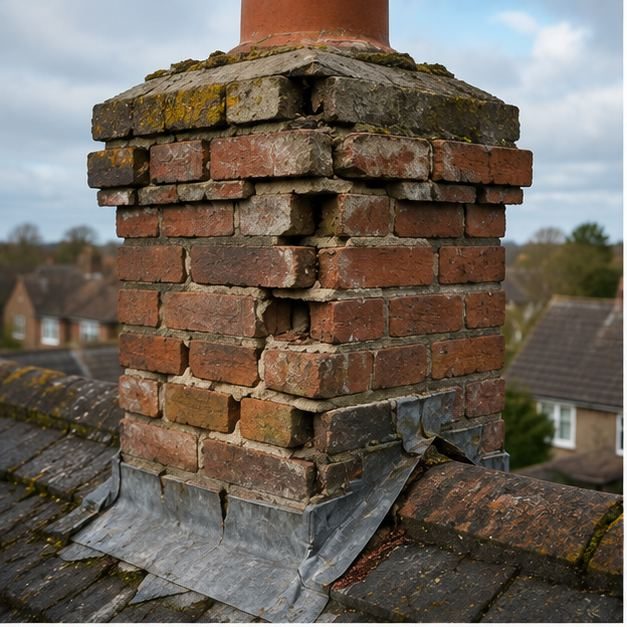
Failed lead flashing is one of the most frequent culprits, particularly where the lead has lifted away from the brick joint it was originally dressed into, or cracked after years of expanding and contracting with the weather. Because flashing sits right at the join between chimney and roof, even a small gap here can let a surprising amount of water through during heavy rain.
Cracked flaunching, the mortar fillet at the top of the stack that holds the pots in place and sheds rainwater away from the flue openings, is another common cause. Once it cracks, water can get down between the pot and the brickwork and find its way into the flue or the loft space below, often only becoming obvious once it's tracked some distance from where it entered.
Porous or spalling brickwork lets water soak directly into the stack rather than shedding it, especially on older properties in Arnos Vale where decades of weathering have worn away the brick's original protective surface. Similarly, a cracked or badly fitted pot can let rain straight down the flue, which can be mistaken for a roof leak if the chimney breast happens to run close to a bedroom or loft wall.
It's also worth distinguishing a genuine leak from condensation within a disused or infrequently used flue, which can produce damp staining and a musty smell without any external water ingress at all. The two look similar from inside a room but need entirely different solutions, one being a repair to the fabric of the chimney and the other being better ventilation or an appropriate cap. It's worth paying attention to how a leak behaves, since that's often a useful clue before anyone's even been up to the roof. A leak that only appears during prolonged heavy rain often points to brickwork saturation, while one that shows up almost immediately with wind-driven rain from a particular direction more often suggests a flashing or soaker gap on that specific face of the stack. Neither observation replaces a proper inspection, but it can help describe the problem accurately when booking one in.
The repair depends entirely on the cause: reflashing in lead, repointing or rebuilding brickwork, renewing flaunching, or replacing a pot are all different jobs with different costs. Because more than one of these can be happening at once, and because water doesn't always show up directly below where it enters, a proper inspection is the only reliable way to diagnose it. We offer free chimney inspections across Arnos Vale and can usually identify the cause on the day.
Get a Free Quote for Chimney Repairs in Arnos Vale
Every chimney is different — the fastest way to get an accurate answer is a quick chat with our team.