
The point where a chimney stack passes through the roof slope is protected by lead — flashing dressed into the brickwork, soakers tucked between the tiles at each side, and a back gutter set behind the stack to channel water safely around it. On Hengrove's mid-century housing, much of this lead is now old enough that repair needs are becoming increasingly common across the area, as the original installations reach the natural end of their expected service life. Recognising the difference early, before a small crack becomes a genuine leak, is usually the difference between a modest repair bill and a considerably larger one involving internal damage to ceilings or timber.
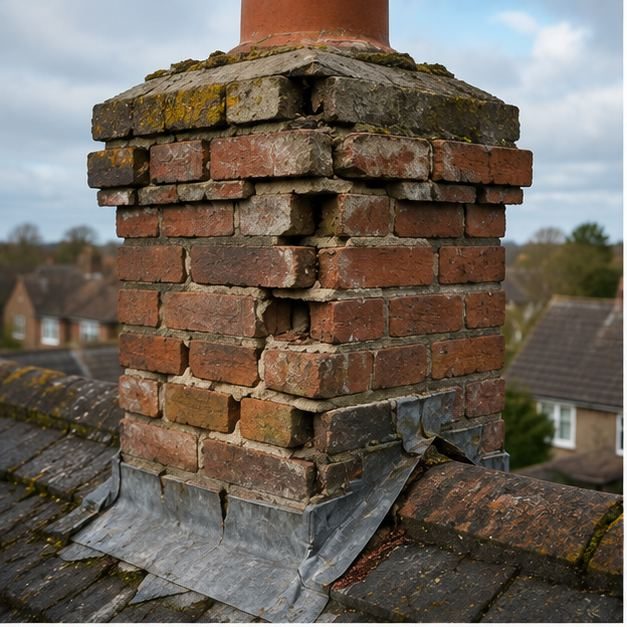
Problems usually develop gradually. Repeated expansion and contraction with the seasons fatigues the metal over years, eventually causing small cracks or splits to appear, or the lead lifting away from the mortar joint it was originally set into. Poor original detailing on some post-war housing can mean flashing was never quite generous enough for the stack it's protecting, making it more prone to failure sooner than better-detailed older work carried out with more traditional methods and materials at the time.
A leak from failed leadwork doesn't always appear exactly where it enters. Water can travel along a rafter or timber before finally showing as a stain on a ceiling some distance from the actual chimney, which is why tracing the problem properly, rather than assuming the nearest defect is the cause, matters for getting the repair right first time rather than needing a return visit a few months later. Homeowners sometimes assume a leak means the whole roof needs attention, when in fact it's often confined to the lead detailing around the chimney alone, making the actual repair considerably more contained than first feared.
Where the lead is basically sound but has come loose or split in a limited area, resealing and re-dressing the affected section is usually sufficient. Where fatigue is more widespread, or the original lead was too thin or poorly detailed to begin with, full replacement of the flashing, soakers, and back gutter together gives a far more durable result than patching one element while leaving the others to fail separately over the following few years, one at a time and at ongoing cost.
This work is carried out at roof height and benefits from proper access rather than a quick ladder job, partly for safety and partly because it allows a thorough check of the surrounding brickwork and roof covering at the same time as the leadwork itself is being addressed by the roofer on site. It's worth noting that a chimney breast which is no longer connected to an active fireplace can still develop leadwork problems, since the flashing continues weathering regardless of whether the flue below is actually in use.
If you've had a leak that seems to trace back to your chimney, Brunel Roofing Bristol can inspect the leadwork on your Hengrove property free of charge and recommend whether repair or replacement makes more sense.
Get a Free Quote for Chimney Repairs in Hengrove
Every chimney is different — the fastest way to get an accurate answer is a quick chat with our team.