
Keeping a chimney properly waterproofed is less about any single product or treatment and more about making sure each of its individual components is doing its job — because on Hengrove's mid-century semis and terraces, it's very often a combination of small failures, rather than one dramatic defect, that eventually lets water into the roof structure below and causes lasting damage inside the property. Thinking of waterproofing as an ongoing process rather than a one-off treatment is the most useful mindset, since even a well-maintained chimney benefits from periodic attention as its individual components continue to age.
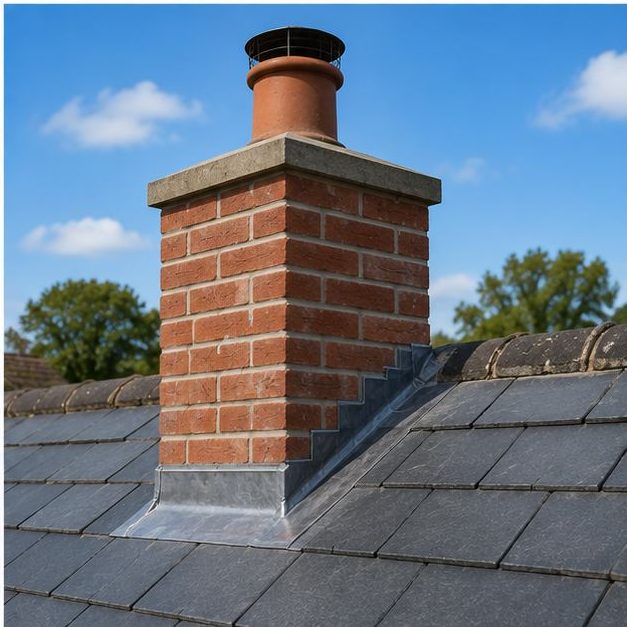
Sound mortar joints are the first line of defence, keeping water out of the brickwork itself rather than letting it soak in and, come winter, freeze and force the brick apart. Lead flashing, soakers, and the back gutter handle the trickiest part of the job — the junction where the stack passes through the roof slope — and are usually the first place a genuine leak develops once they start to fatigue with age. Flaunching at the top of the stack sheds water away from the pot and the brickwork below it, and a crack here can let water track down inside the chimney even while the rest of the stack looks perfectly sound from the ground below.
Because these elements work together, waterproofing a chimney properly means checking all of them rather than treating just the obviously damaged part and assuming the rest is fine. A stack with new flashing but failing mortar, for instance, will still let water in — just through a different route than before, undermining the benefit of the repair already carried out and paid for by the homeowner. Some homeowners also ask about proprietary waterproofing coatings applied directly to brickwork, but these are generally best avoided on older or porous brick, since they can trap moisture in much the same way as the wrong mortar mix would.
Regular checks, particularly ahead of the wetter autumn and winter months, are the most cost-effective way to catch small issues before they become active leaks. This is especially worth doing after any significant storm, since strong winds can loosen pots, crack flaunching, or lift flashing that had otherwise been holding up fine for years beforehand without any problem at all.
For flues no longer in use, fitting a suitable cowl or cap also plays a role in waterproofing, preventing rain from falling directly down an open flue and reducing the chance of birds nesting, both of which can otherwise contribute to damp problems building up gradually over time without anyone noticing until it's fairly advanced. Homeowners are sometimes surprised to learn that a chimney can look entirely sound from the garden and still have a developing problem at the top of the stack, which is exactly why regular closer checks matter.
If it's been some time since your Hengrove chimney was properly checked over, Brunel Roofing Bristol offers free inspections to identify anything that needs attention before it turns into a leak inside the home.
Get a Free Quote for Chimney Repairs in Hengrove
Every chimney is different — the fastest way to get an accurate answer is a quick chat with our team.