
Most homeowners in Lawrence Weston only give their chimney a second thought once something has clearly gone wrong, yet the stack is one of the most exposed parts of the whole roof and the warning signs are usually visible well before a leak shows up indoors. Sitting proud of the roofline and taking the full force of wind, rain and frost from every direction, a chimney tends to deteriorate faster than the roof slopes around it, so a bit of knowledge about what to look for from ground level can save a good deal of money and disruption further down the line.
The first thing worth checking is the mortar between the bricks. Crumbling, cracked or missing joints let water soak into the wall rather than run off it, and once that starts the damage accelerates through winter as trapped moisture freezes and expands. A quick look at the guttering below the stack after a windy day is also telling — small chips of mortar or brick debris collecting there usually mean repointing is overdue, particularly on the older housing stock found in parts of Lawrence Weston where the original mortar has simply reached the end of its working life. Dark, damp-looking patches on the mortar itself, even where nothing has actually crumbled away yet, are also worth noting, since they often mark the joints that will fail first over the following winters.
Spalling bricks are another sign to watch for: a brick face that has started to flake, bulge or pop off in flat chunks is evidence that moisture has been getting in and freezing repeatedly, weakening the brick from within. Left long enough, individual spalled bricks can compromise the strength of the whole stack, so it is far better to deal with a handful of damaged bricks than to wait until a larger section needs rebuilding. This kind of frost damage tends to worsen quickly once it starts, since a cracked brick face holds even more moisture than a sound one, so a stack that seemed fine the previous summer can look noticeably worse by the following spring.
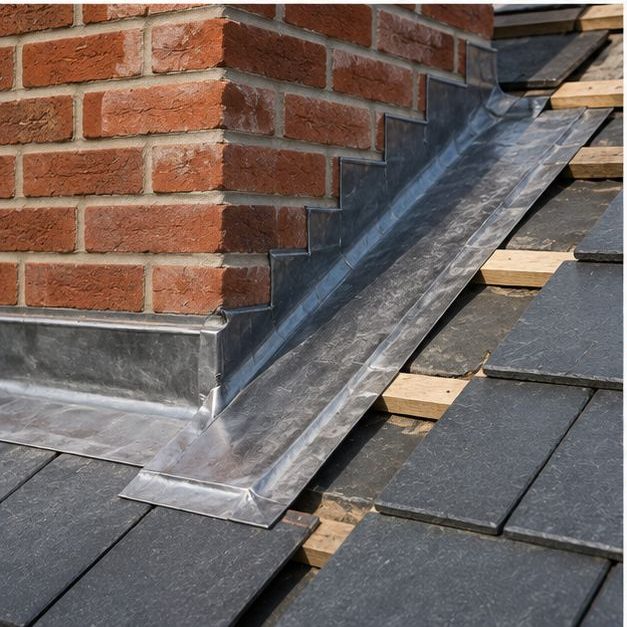
Inside the house, a rusty-brown stain on a chimney breast or ceiling near the flue, or a persistent damp, musty smell in a bedroom that backs onto the stack, often points to a problem with the lead flashing where the chimney meets the roof, or with the flaunching — the mortar fillet around the base of the pots — rather than the brickwork itself. These junctions are common weak points, and because water can travel some distance before it shows itself indoors, a proper inspection is usually needed to trace the source accurately.
More serious signs, such as a stack that looks visibly out of line with the roof, or cracks running horizontally through several courses of brick, point towards structural movement rather than simple weathering and should not be left. These cases call for an experienced eye to judge whether partial rebuilding is required, and in the meantime a leaning or badly cracked stack can be a genuine safety concern, particularly in exposed weather. It is worth remembering that movement of this kind rarely reverses itself, so a stack that looks slightly out of true one year is unlikely to look better the next without proper intervention.
If any of this sounds familiar for a property in Lawrence Weston, it is worth arranging a proper look before winter weather turns a manageable repair into something more costly. Brunel Roofing Bristol offers free, no-obligation inspections and quotes, backed by a 15-year guarantee on completed work, along with a 24-hour emergency call-out service for anything that cannot safely wait.
Get a Free Quote for Chimney Repairs in Lawrence Weston
Every chimney is different — the fastest way to get an accurate answer is a quick chat with our team.