
A damp patch appearing on a ceiling or chimney breast is rarely as simple to diagnose as it first looks, and this is especially true on the taller stacks common around The Downs, where water can travel a surprising distance from where it enters to where it finally shows itself indoors. Gravity and the layout of the roof structure mean a leak spotted in a bedroom is not necessarily directly below the point where water is actually getting in at roof level, which trips up a lot of well-intentioned first attempts at a fix.
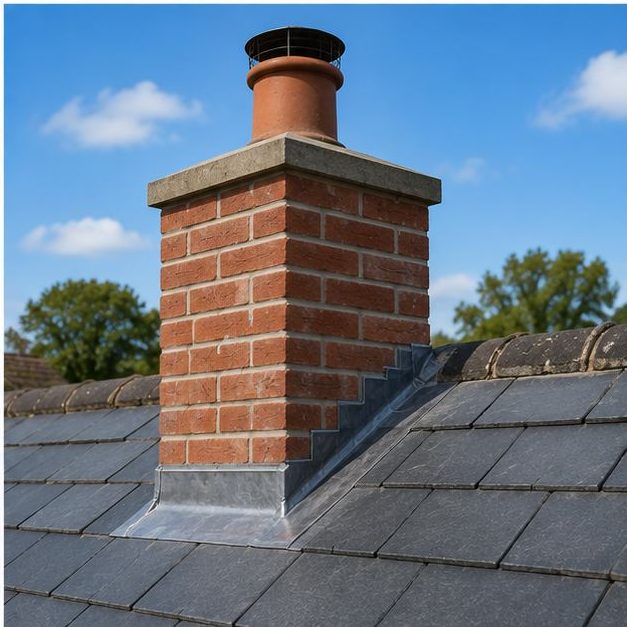
There are several usual suspects when it comes to chimney-related water ingress: failed pointing letting rain soak directly into the brickwork, lead flashing or soakers that have worked loose or corroded, a cracked or poorly bedded chimney pot, or flaunching — the mortar fillet around the base of the pots — that's crumbled and split, allowing water straight down inside the stack. Each of these produces a slightly different pattern of damp, though from inside the house they can look very similar, especially once the water has soaked through several layers of material.
Tracing the actual source properly means inspecting the whole stack from the top down, checking flashing and back gutters, examining the state of the pointing across all faces of the chimney, not just the ones easily visible from the ground, and looking inside the loft space where the chimney passes through the roof structure. Guesswork here tends to lead to repairs that don't actually stop the leak, which is frustrating and costly for the homeowner who's already spent money addressing the wrong problem before finally getting a proper inspection done.
On period properties around The Downs, it's also worth checking whether a flue has been capped or is disused, since a chimney that's no longer in use but hasn't been properly weathered at the top can still let water track down inside the stack and eventually into the room below, even with no fire ever having been lit. This is one of the more overlooked causes of a persistent, hard-to-explain leak in an older property.
Timing matters too — a leak that only appears during heavy, wind-driven rain but not in calmer wet weather often points towards a flashing or joint issue rather than general porosity in the brickwork, since it takes a certain force of weather to drive water past a partially failed seal. Noting when a leak appears, and from which direction the wind was blowing, can be genuinely useful information to pass on before an inspection.
If you've got a leak connected to a chimney and previous attempts to fix it haven't worked, it's usually because the wrong part of the stack was treated. Brunel Roofing Bristol carries out proper diagnostic inspections across The Downs to identify exactly where water is getting in before recommending any repair, and offers 24-hour emergency call-out where a leak needs urgent attention.
Get a Free Quote for Chimney Repairs in The Downs
Every chimney is different — the fastest way to get an accurate answer is a quick chat with our team.