
Chimneys on many of Redland's period terraces are often genuinely original features, built to a scale and prominence that modern chimneys rarely match — and that prominence means they take a disproportionate share of wind pressure during any serious storm. The lead flashing sealing the join between chimney and roof has usually been repaired or replaced at least once over the property's lifetime, but age still catches up with it eventually, and severe weather is often what exposes the point it's finally reached. Multiple flues serving several fireplaces within a single grand Redland property can also mean a correspondingly larger area of flashing to maintain, simply because the chimney stack itself is bigger and more complex than on a smaller home.
Lead's flexibility is what makes it useful for this kind of detailing in the first place, allowing it to be dressed around irregular joints and accommodate the slight movement between brick and roof structure over time. That same flexibility means it can fatigue with repeated exposure to wind, gradually developing splits or lifted edges that let water through — sometimes without any single dramatic failure that would obviously explain a new leak. On a chimney that has stood for well over a hundred years, this kind of gradual fatigue is often simply a matter of time rather than a sign of poor original workmanship.
On taller Redland properties, chimney stacks are also more exposed to wind-driven rain specifically, with rainfall pushed at an angle against the stack and finding its way behind flashing that would comfortably shed water falling straight down. This is part of why chimney leaks on period properties often coincide with genuinely stormy weather rather than ordinary rain, even where the underlying flashing weakness has been present for some time beforehand.
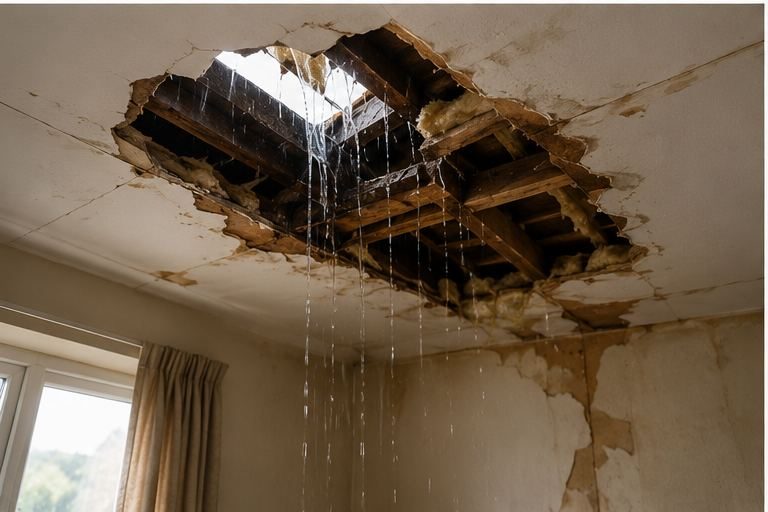
As with most chimney leaks, the water doesn't always appear where the fault is. It's common for a leak to show up as a stain on a chimney breast a floor or two below the roof, or as damp patches on a ceiling some distance from the chimney itself, since water tracks along flues and timbers before finding a route into visible living space.
Repairing chimney leadwork properly on a period property means removing the failed section, re-dressing new lead carefully around the existing joint, and checking the surrounding brickwork and pointing for related deterioration. Given the height involved, this is work that benefits from proper access and an experienced hand rather than a quick patch. A rushed repair on a chimney this exposed tends not to last, which makes doing the job properly the first time worthwhile.
Brunel Roofing Bristol carries out emergency chimney leadwork repairs across Redland, with 24-hour call-out and free inspections to establish exactly what repair is needed. We take particular care with the detailing on period chimneys, so the finished repair blends in visually and performs properly for many years to come.
Need Emergency Roof Repairs in Redland?
Every case is different — the fastest way to get an accurate answer is a quick chat with our team.