
Ridge and hip tiles cap the highest and most exposed lines of a roof — the ridge running along the very top, and hips running down the diagonal edges where roof slopes meet on a hipped roof shape, common on many of Redland's more substantial period properties. Both sit fully exposed to wind from every direction, and both traditionally rely on a bed of mortar to stay properly seated, which is precisely the detail that tends to fail first during a serious storm. Larger detached and semi-detached Redland properties, in particular, often have more extensive hip detailing than a simple terraced roof, simply because of the more elaborate roof shapes common to this kind of period housing.
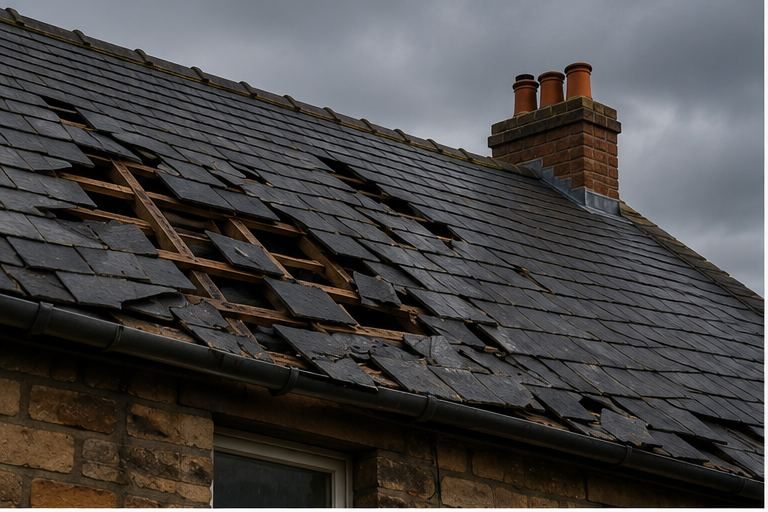
Mortar beds deteriorate gradually over years of weathering, developing hairline cracks long before any tile actually moves. A storm doesn't create this weakness so much as exploit it, providing enough wind force to finally dislodge a tile that the mortar had been struggling to hold in place for some time. This is why ridge and hip damage often seems to appear suddenly after a storm, even though the underlying cause has usually been building gradually beforehand. A close look at ridge mortar during a routine check can sometimes catch this deterioration before a storm turns it into an actual missing tile.
Hip tiles face a slightly different challenge to ridge tiles, sitting on a diagonal line rather than a horizontal one, which affects how wind and rain interact with them. A loose hip tile can be more prone to slipping downward under its own weight once dislodged, rather than simply rattling in place, making prompt attention particularly worthwhile once a problem is noticed. On larger period properties with hipped roof sections over bay windows or rear additions, hip damage can sometimes go unnoticed longer simply because these areas are less visible from the street.
Because ridge and hip tiles sit at the very top of often steeply pitched Redland roofs, repair work generally requires proper scaffolding access rather than a simple ladder — worth factoring into timing expectations, particularly if multiple sections need attention rather than a single isolated tile.
Repair options include re-bedding tiles in fresh mortar for a traditional finish consistent with the property's period character, or in some cases fitting a mechanically fixed dry ridge or hip system for improved long-term resilience against wind. Which makes more sense depends on the specific property and the extent of existing damage. Both approaches have their place, and an experienced roofer can talk through which suits a particular Redland roof once the damage has been properly assessed.
Brunel Roofing Bristol repairs storm-damaged ridge and hip tiles across Redland, with free inspections and a 15-year guarantee on all completed repair work. We check less visible roof sections as part of every inspection, not just the areas easily seen from the street, so nothing gets missed.
Need Emergency Roof Repairs in Redland?
Every case is different — the fastest way to get an accurate answer is a quick chat with our team.