
The ridge, running along the very top of a roof, takes the brunt of wind uplift more than almost any other part of the structure, which makes ridge tile damage a familiar sight across Hengrove after a spell of high wind, even on roofs that otherwise seem to have escaped unscathed from the very same passing storm event. It's not unusual for a homeowner to first notice ridge damage from inside the loft, where daylight visible through a gap at the apex is a clear giveaway.
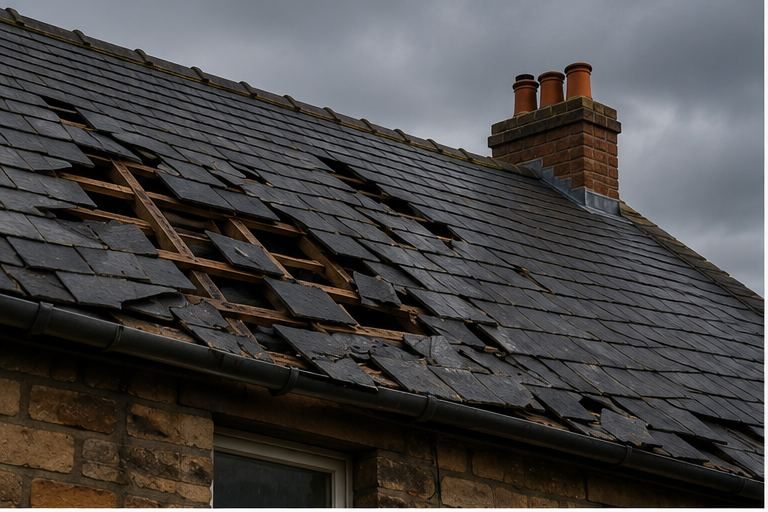
Traditional ridge tiles are held in place with mortar bedding, and it's usually this mortar, rather than the tiles themselves, that fails first, cracking and crumbling with age until the tiles are only loosely secured and vulnerable to being lifted, cracked or knocked out of alignment by a strong gust, sometimes without the homeowner noticing until the next storm brings a leak indoors and forces the issue. A ridge that's noticeably uneven along its length, rather than in a straight, level line, often indicates that several tiles have shifted rather than just one isolated tile.
A displaced ridge tile leaves a gap at the highest point of the roof, and because water runs downhill, even a small gap here can let a surprising volume in during heavy rain, often tracking some distance down inside the roof structure before showing up as a leak elsewhere in the property, well away from the ridge itself entirely and hard to trace without inspection. Where ridge tiles have been mismatched from previous repairs, replacing a whole run at once can give a tidier, more consistent result than patching individual sections repeatedly over time.
Repairing ridge damage properly usually needs scaffolding or comparable access equipment, since the ridge sits at the top of the roof and isn't something that can be reached safely or worked on properly from a standard ladder, particularly on steeper Hengrove roofs where the pitch makes casual access genuinely unsafe for anyone attempting it without proper training. Hip roofs, common on some more modern Hengrove properties, have additional hip tiles running down the sloped corners, and these are worth checking alongside the main ridge itself.
For roofs that have suffered repeated ridge damage, a dry ridge system, using mechanical fixings rather than mortar, is worth discussing as an alternative that tends to hold up better against sustained wind over the years, reducing the likelihood of the same repair being needed again after the next major storm passes through the local area. A properly re-bedded ridge, using fresh mortar or a mechanical dry system, should comfortably outlast the original bedding it's replacing if installed correctly the first time.
If high winds have left ridge tiles loose or missing on your Hengrove roof, it's worth having it looked at before the next storm finds the same weak point. Brunel Roofing Bristol carries out emergency ridge repairs with 24-hour call-out available when needed.
Need Emergency Roof Repairs in Hengrove?
Every case is different — the fastest way to get an accurate answer is a quick chat with our team.