
Slate is a genuinely durable roofing material, and many of Clifton's period properties still carry their original slate coverings decades after installation. That longevity does not make slate immune to storm damage, however, and there are several ways severe weather can affect a slate roof that homeowners are often unaware of until a problem appears indoors, sometimes years after the slate itself was first fitted.
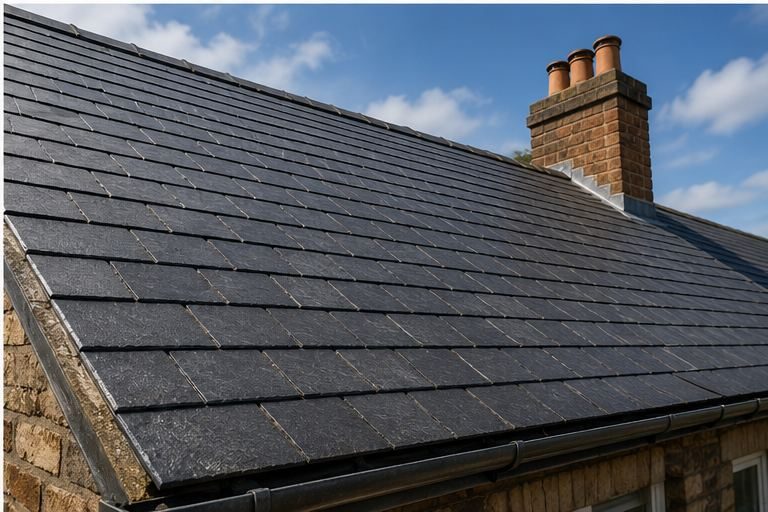
The most visible issue is a slipped slate, where the nail fixing holding it in place has corroded over time, a process known in the trade as nail sickness. Wind does not need to be exceptionally strong to dislodge a slate once its fixing has weakened this way, which is why slipped slates often appear after a fairly ordinary windy spell rather than only during the most severe storms. Once a slate slips, the gap it leaves exposes the roof underlay, and eventually the property itself, to water ingress.
Cracked slates are another common outcome, sometimes caused directly by wind stress and sometimes by debris, such as a broken slate from higher up the roof, striking a slate lower down. A hairline crack in a slate is not always obvious from ground level, but it can still allow water through over time, particularly during driving rain when wind pushes water sideways rather than letting it simply run off. Occasionally a slate can crack without falling or slipping at all, staying in place while quietly letting water through every time it rains, which is one of the reasons a leak can appear to come from nowhere on an otherwise apparently sound roof.
Roof valleys and the areas around chimneys are particularly vulnerable on slate roofs, since these junctions rely on lead flashing working alongside the slate rather than the slate alone. Storm damage to this flashing, combined with even a minor issue in the surrounding slate, can lead to leaks that are disproportionately difficult to trace, since water can travel some distance under the slate before finding a way through to the roof timbers or ceiling below. This is one of the main reasons slate roof repairs on Clifton's period properties are best entrusted to someone with genuine experience of the material, rather than treated as a like-for-like swap with modern tiling techniques.
Because slate roofs across Clifton vary considerably in age and condition, what looks like a single slipped slate can sometimes be an early sign that the fixings across a wider area are reaching the end of their working life, which is worth bearing in mind if slipped slates start recurring rather than being a one-off event. A pattern like this is generally worth flagging to a roofer explicitly, rather than simply asking for the latest slate to be replaced in isolation.
If your Clifton property has slate roofing showing signs of storm damage, Brunel Roofing Bristol can carry out like-for-like repairs and offers a free inspection to assess whether the issue is isolated or part of a wider pattern worth addressing.
Need Emergency Roof Repairs in Clifton?
Every case is different — the fastest way to get an accurate answer is a quick chat with our team.