
Ridges and verges sit at the edges and high points of a roof, exactly where wind pressure concentrates as it passes over a building, which makes them some of the first areas to show damage after a genuinely severe storm. For Shirehampton homes with traditional mortar-bedded ridge tiles and verges, this is a pattern worth understanding rather than a random stroke of bad luck when it happens to affect a particular property. It also explains why two neighbouring houses, built at the same time with the same materials, can come through the same storm with very different amounts of damage depending on how well their mortar has aged.
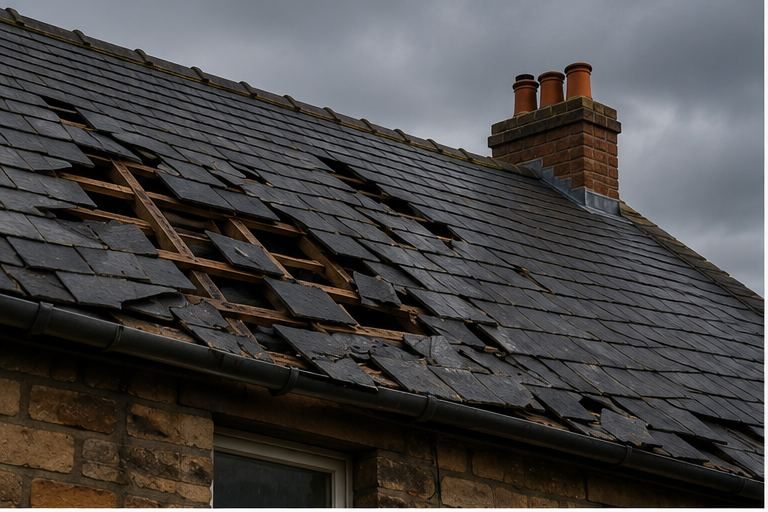
Ridge tiles run along the very top of the roof and are typically fixed in place with mortar, a method that's reliable for years but gradually weakens as the mortar ages, cracks, and loses its grip on the tiles it's holding. High winds exploit any weakness that's already there, working ridge tiles loose or, in more severe cases, lifting them off entirely, leaving an open gap right along the roof's most exposed line where water can get straight in during the next downpour. Once a single ridge tile has gone, the mortar bed either side is usually left more exposed too, meaning the gap tends to widen with each subsequent gust rather than staying the same size.
Verges, the edges of the roof at the gable end, face a similar problem. Traditional mortar-bedded verges can crack and let wind get underneath the tiles nearest the edge, sometimes lifting or dislodging them in a strong enough gust that catches beneath the tile. This is one of the reasons dry verge systems, which use mechanical fixings rather than mortar, have become a popular upgrade for homeowners looking to reduce the risk of repeat wind damage in future storms across the area. Verge tiles that overhang the gable end rely on that mortar bed more than tiles further into the roof slope, which is part of why they're often among the first to show wind damage.
Damage to ridges and verges isn't always dramatic. Sometimes it's simply hairline cracking in the mortar that isn't obvious from the ground but will worsen with each subsequent storm, gradually loosening tiles that currently look secure, which is why these areas are worth a proper check after any significant wind event rather than just a glance from the garden below the roofline. A pair of binoculars can help spot obvious gaps from the garden, but hairline cracking generally isn't visible without getting closer to the roof itself.
Repair typically involves re-bedding or replacing loosened ridge and verge tiles, and re-pointing any cracked mortar, with an upgrade to a dry verge or dry ridge system offered where it makes sense as a longer-term improvement rather than simply repeating the original method that failed in the first place and may fail again eventually. Where several ridge tiles have failed at once, it's often more cost-effective to address the whole ridge line in one visit rather than returning repeatedly as individual tiles continue to work loose.
If a recent storm has affected the ridge or verge of your Shirehampton roof, Brunel Roofing Bristol can inspect and repair the damage, and advise on dry verge options where a more resilient long-term fix would be worthwhile for the future rather than a like-for-like repair.
Need Emergency Roof Repairs in Shirehampton?
Every case is different — the fastest way to get an accurate answer is a quick chat with our team.