
A new roof is only as good as the working platform it is installed from, and in Westbury-on-Trym that point matters more than many homeowners realise. With its mix of period cottages, inter-war semis and larger family homes set back from tree-lined pavements, roof pitches, chimney positions and eaves heights vary noticeably from property to property, which means scaffolding cannot simply be put up to a standard pattern copied from the last job down the road. It has to be designed around the individual building, taking account of ground levels, boundary walls, garden layout and the shape of the roof itself before a single pole goes up, and that design work happens well before any scaffolding lorry arrives on site.
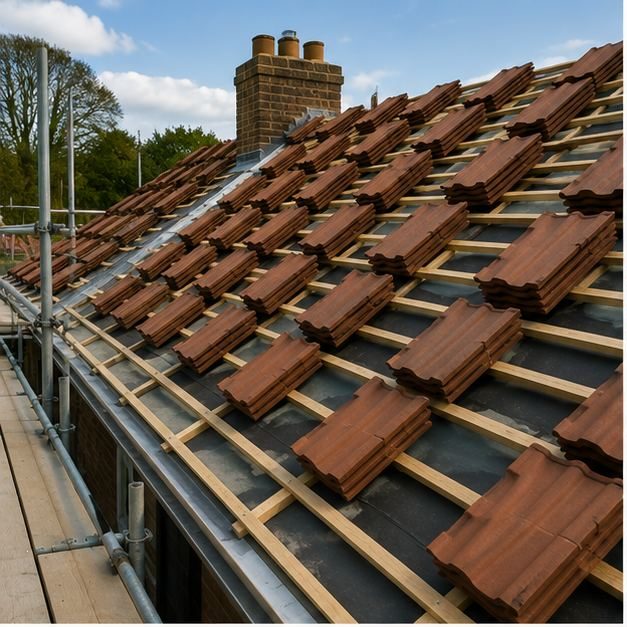
Properly erected scaffolding gives roofers a stable, level surface to work from at every point around the roof, rather than relying on ladders that limit reach and increase the chance of tiles being dropped or handled awkwardly. This matters particularly on the steeper pitches and hip roofs seen on many of the older properties in the area, where working safely without a full platform would be difficult if not impossible to do properly. A continuous platform also means the team can move freely along ridges, valleys and hips without repeatedly repositioning ladders, which keeps the whole job moving at a steady, controlled pace rather than stopping and starting to reposition access equipment.
Good scaffolding also protects the quality of the finished roof. When access is easy and secure, roofers can take the time needed to bed ridge tiles correctly, dress flashing neatly around chimneys, and check each course of tiles or slates as they go, rather than rushing to minimise time spent on an insecure structure. Rushed work from poor access is one of the more common causes of early roofing faults, from lifted verges to poorly sealed flashing that only becomes obvious once the weather turns, and by then the cost of putting it right is far higher than getting it right the first time.
There is a compliance side to this too. Scaffolding needs to be erected by competent contractors, inspected at set intervals, and designed to cope with wind loading, especially on exposed or elevated plots that are not uncommon around Westbury-on-Trym, where mature trees and open aspects can funnel wind differently from one garden to the next. Handrails, toe boards, ties into the building fabric and secure base plates are not optional extras but part of a properly certified structure, and Brunel Roofing Bristol works only with scaffolding that meets these standards, treating it as a core part of the job rather than an afterthought, and factoring its cost and design into the quote from the very start.
A stable platform also underpins the guarantee that goes with the finished roof. Work carried out under Brunel Roofing Bristol's 15-year guarantee needs to have been fitted correctly at every stage, from the underlay and battens through to the ridge and flashings, and that level of consistency is only realistic when the team can reach every part of the roof comfortably and safely rather than stretching from a ladder or an unstable platform for the trickier sections.
If you are planning a re-roof and want to understand how access will be arranged for your particular property, Brunel Roofing Bristol can talk you through the plan and provide a clear quote for the work involved, including how the scaffolding itself will be specified and positioned for your home.
Get a Free Quote for New Roof Installations in Westbury-on-Trym
Every roof is different — the fastest way to get an accurate answer is a quick chat with our team.