
Before any repair is agreed, a decent chimney inspection in Bishopsworth should cover a lot more than a glance up from the pavement. Chimneys are difficult to assess accurately from ground level because most of the detail that actually matters, the state of the mortar joints, the flaunching, the flashing where the stack meets the roof, is simply too small and too high up to judge properly with the naked eye. That is why a proper inspection usually means getting up close, either from a ladder, a tower scaffold, or scaffolding depending on the height and access involved.
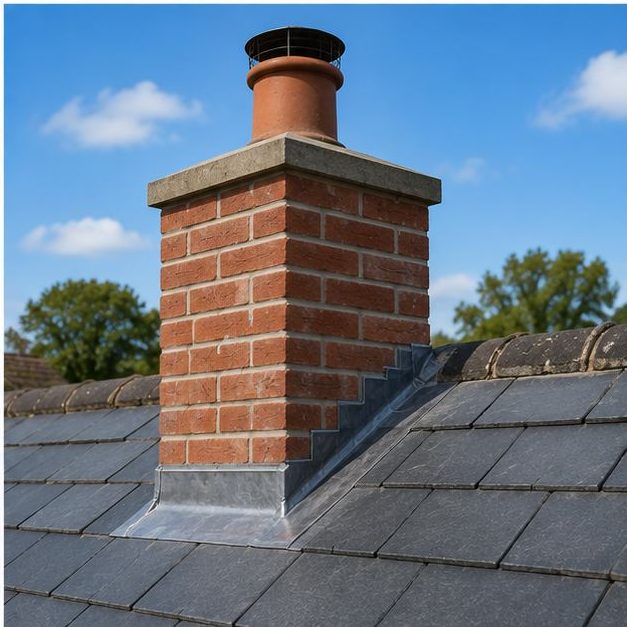
The brickwork itself is the obvious starting point. A roofer will check the mortar joints for erosion, cracking and any sign of movement between courses, and will look closely at individual bricks for spalling, where the face has started to crack and flake from repeated wet-and-freeze cycles. On older housing stock in Bishopsworth, this is also where the type of mortar originally used matters: lime mortar, common on period brick, behaves very differently to the harder cement mortar typically used on more modern construction, and repairs need to match what is already there rather than fighting against it.
At the top of the stack, the flaunching gets particular attention because it is doing an important, unglamorous job: keeping water out of the gap between the pot and the brickwork below it. Cracked or missing flaunching lets rainwater track directly down inside the stack, which can cause damage well out of proportion to how minor the crack looks from below. The pots themselves are checked for stability, cracking, and whether a cowl is fitted or needed, since an unprotected flue can let rain in directly or create downdraught problems in the room below.
Where the chimney meets the roof, the lead flashing and any soakers are inspected separately, because this junction is one of the most common sources of a leak that shows up indoors nowhere near where the water actually got in. Flashing that has lifted, split, or simply perished with age is a frequent cause of water ingress that gets blamed on the chimney itself when the brickwork above may be perfectly sound. Tracing a leak properly sometimes means checking several points before the actual source is confirmed.
A thorough inspection will also take a view on the chimney as a whole: whether it is still in use, whether it has been capped, and whether its overall lean, height and condition suggest anything beyond localised repair, up to and including partial or full rebuilding in more serious cases. All of this feeds into an honest recommendation rather than a default sell towards the most expensive option available.
If it has been some years since your Bishopsworth chimney was last looked at properly, or you are simply unsure what state it is in, a free inspection is the sensible starting point. Brunel Roofing Bristol can assess the stack, flashing and pots together and give you a clear, honest picture of what, if anything, needs doing.
Get a Free Quote for Chimney Repairs in Bishopsworth
Every chimney is different — the fastest way to get an accurate answer is a quick chat with our team.