
Chimney stacks in Bishopsworth take a battering that most of a house never has to deal with, standing exposed above the roofline through decades of wind, rain and frost cycles, so it is worth knowing which warning signs actually matter. Not every crack or stain is urgent, but a handful of specific symptoms tend to point towards a stack that is genuinely losing stability rather than simply weathering normally, and those are worth acting on sooner rather than later.
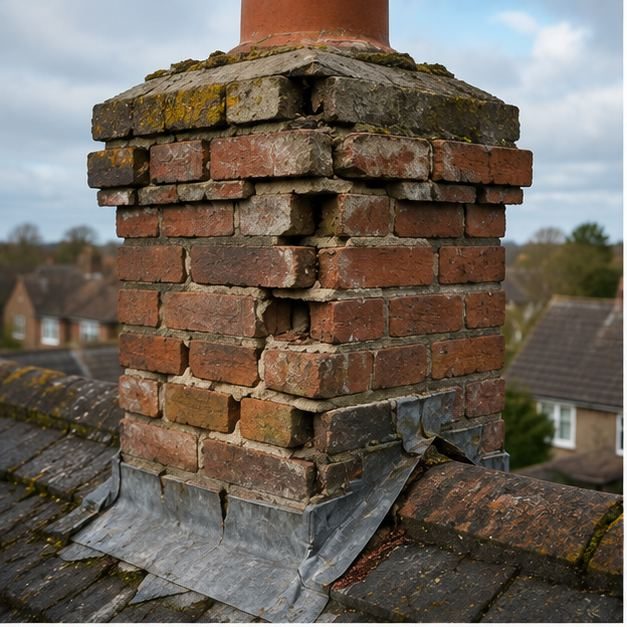
A visible lean is the clearest sign, and often the most alarming to notice. A chimney should stand plumb, and any deviation from vertical, particularly if it seems to have changed over recent months, suggests movement in the structure below the visible brickwork, possibly in the mortar bed or even the stack's foundation within the roof structure. This is different from the slight, ancient tilt some ageing chimneys have always had; it is a change worth having assessed rather than assumed to be historic. On a chimney with several decades of weathering behind it, this kind of lean can develop slowly over many years before it becomes visually obvious, which is exactly why it is easy to miss until someone points it out directly.
Cracking is another key indicator, and the pattern matters. Fine, hairline cracks scattered across mortar joints are common ageing and usually addressed with repointing. Wider, stepped cracks running diagonally across several courses of brick, however, suggest more significant movement and are the kind of thing that should prompt a proper structural look rather than a like-for-like repointing job. Bulging brickwork, where the face of the stack has started to belly outward, is a similarly serious sign that the wall has lost its original structural integrity.
Debris is a practical, low-tech warning sign worth checking for after any storm: small pieces of mortar or brick fragments in the guttering, on the roof slopes below the stack, or on the ground near the base of the chimney all suggest material is being shed from height. On taller period properties in Bishopsworth, where scaffolding is often needed to get eyes on the stack directly, this ground-level evidence is sometimes the first clue anything is wrong. It is also worth glancing at the roof slopes either side of the stack after any strong wind, since larger fragments sometimes lodge against tiles rather than sliding straight off, and can go unnoticed for weeks if nobody looks up specifically to check.
Internally, damp patches on a chimney breast, particularly ones that appear or worsen after heavy rain, can also point to instability rather than a simple leak, since water tracking through failing masonry both weakens the structure and finds its way inside. A leak indoors is not always directly below its source, so internal damp near a chimney breast is worth linking back to the stack even if the timing does not seem to match a specific storm.
None of these signs are something to sit on. If you have noticed a lean, unusual cracking, debris after windy weather, or damp linked to your chimney, Brunel Roofing Bristol can carry out a free inspection of Bishopsworth properties and advise honestly on whether repointing, partial rebuilding, or a fuller rebuild is the right next step.
Get a Free Quote for Chimney Repairs in Bishopsworth
Every chimney is different — the fastest way to get an accurate answer is a quick chat with our team.