
Between spotting a leak and getting a roofer out to fix it, there's often a gap of a few hours or, at worst, a day or two, and what happens indoors during that window can make a real difference to how much damage a storm ultimately causes to a Greenbank home. A little organised effort in those early hours often saves considerable expense and disruption later, and it's worth having a rough plan in mind before you actually need it, rather than working it out under pressure while water is dripping. Having a simple plan ready, knowing where spare buckets and tarpaulin are kept, makes those first crucial minutes considerably less stressful when a leak does start unexpectedly.
The first priority is redirecting water away from anything valuable. Moving furniture, electronics and belongings clear of the affected area, and covering anything too heavy to move with plastic sheeting, limits the damage while the source of the leak is dealt with. A bucket or container catches dripping water, but check it regularly since a steady drip can fill one faster than expected, particularly overnight when nobody's watching and the leak has hours to run unchecked before anyone notices. It's worth keeping a supply of old towels or absorbent cloths on hand too, since these can limit how far water spreads across flooring before it's mopped up properly.
If a ceiling is bulging or sagging with trapped water, it can be safer to carefully puncture it in a controlled spot, allowing the water to drain into a container, than to leave the weight building until the ceiling gives way on its own, often across a wider area and at an unpredictable moment. It's a counterintuitive step for many homeowners, but it's a genuinely sensible one when a ceiling is visibly straining under the accumulated weight of trapped water above it. A torch is useful here, since checking a loft for the first signs of dampness in poor light is far harder than it sounds, and easy faults can be missed entirely.
Switching off electricity to any room where water is tracking near light fittings or sockets is a sensible precaution, and it's worth checking the loft space too if it's safe to access, since insulation and stored items there can soak up water and stay damp long after the roof itself has been repaired, sometimes leading to a musty smell that lingers for weeks or months afterwards if the space isn't properly dried out. Where a whole room has been affected, opening a window briefly, weather permitting, can help reduce the humidity that builds up and slows down how quickly everything eventually dries out.
Photographing the damage as it happens, before anything is moved or cleaned up, is useful to have on record, whether for your own reference or if you later need it alongside a written report from a roofer, particularly if a home insurance claim is being considered as a result of the storm and its aftermath. Keeping receipts for anything damaged or discarded, alongside your photographs, rounds out a useful record should you need to refer back to it later on.
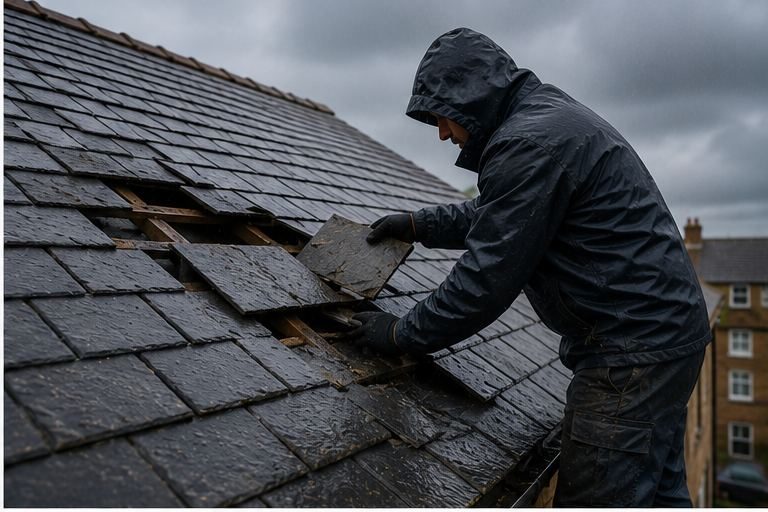
These steps buy time, but they're not a substitute for getting the roof itself looked at and temporarily weatherproofed as soon as possible. Brunel Roofing Bristol offers a 24-hour emergency call-out for homes across Greenbank so the source of the problem can be found and secured without unnecessary delay.
Need Emergency Roof Repairs in Greenbank?
Every case is different — the fastest way to get an accurate answer is a quick chat with our team.