
Chimneys take some of the worst punishment in a storm, standing higher than the rest of the roof and exposed to wind from every direction. Across Greenbank, where many properties still have their original brick chimney stacks, a period of severe weather is a good prompt to check a few specific things rather than simply assuming everything above the roofline has held up fine. A chimney that looks unremarkable from the street can still be hiding significant damage higher up, out of view from anyone standing below on the pavement. It's worth remembering that a chimney is essentially a separate structure bolted onto the main roof, and it moves, weathers and ages differently to the tiles or slates around it.
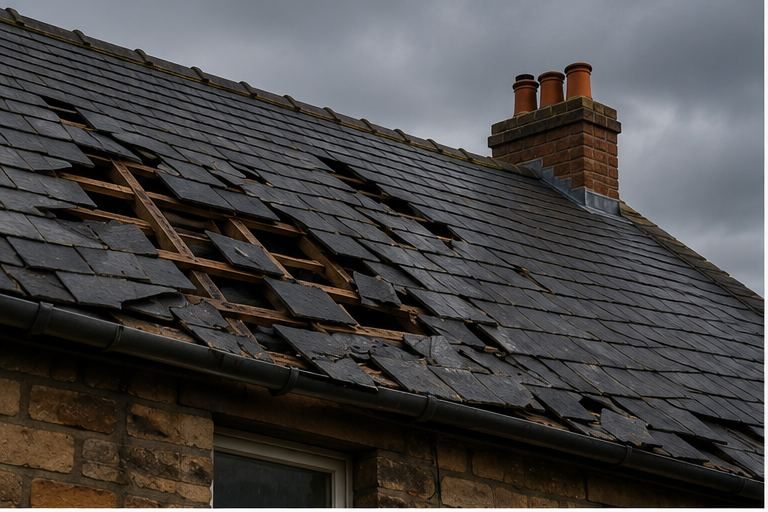
Start by looking at the pointing between the bricks, both from ground level with binoculars if possible and, more thoroughly, from a proper inspection. Storms can loosen mortar that was already weakening, and gaps here let water into the chimney structure itself, which over time can affect its stability as well as cause damp inside the chimney breast. Repeated freeze-thaw cycles over a winter can make an already weakened stack considerably worse, so it's worth checking again after any particularly cold spell too, not just after a storm. Small, hairline cracks that seem cosmetic today are often the early stage of a fault that becomes far more serious after another year or two of weather exposure.
The flashing where the chimney meets the roof deserves particular attention, as this is one of the most common points for a storm to cause a leak. Look for any lifted or displaced lead, and be aware that a leak here often shows up as a stain some distance from the chimney rather than directly beside it, which can make the fault easy to overlook if you're only checking the area immediately around the stack itself and nowhere else. A torch and a careful look from the loft, where the chimney breast passes through the roof space, can sometimes reveal a leak's true starting point before it ever reaches the ceiling below.
Chimney pots and cowls are also worth checking, as high winds can crack, loosen or dislodge them entirely, and a damaged pot left in place can let more rain into the flue than the chimney was ever designed to cope with, sometimes worsening damp problems inside the property over the following weeks even without an obvious external sign of damage visible from the garden or street below. Debris such as broken pot fragments in a gutter, even a small amount, is usually worth investigating rather than simply clearing away and forgetting about.
A visibly leaning stack, cracked brickwork, or debris found in the garden are all signs that warrant a professional look before the chimney is used again, particularly if it serves a working fireplace or flue. Even where none of these obvious signs are present, a chimney that has recently taken sustained wind loading benefits from a closer look, since some damage simply isn't visible from ground level at all. It's also worth asking whether the chimney is still in regular use, since a stack that's rarely swept or inspected can hide problems for far longer than one that's checked routinely.
If your chimney has been through recent storms, having it checked properly is a sensible precaution rather than an overreaction. Brunel Roofing Bristol can carry out a thorough chimney inspection for Greenbank properties and advise honestly on whether repair work is needed.
Need Emergency Roof Repairs in Greenbank?
Every case is different — the fastest way to get an accurate answer is a quick chat with our team.