
Many older roofs rely largely on the weight of the tiles themselves, along with a fairly modest number of nails, to stay in place through ordinary weather. On a sheltered roof this can work adequately for many years without obvious trouble, but on a more exposed property it leaves individual tiles vulnerable to being lifted and dislodged during strong gusts, particularly where a roof faces open ground with little to break the wind before it arrives. Once one tile moves, the gap it leaves can allow wind to get underneath neighbouring tiles too, so a small initial failure can spread quickly across an entire slope in a single storm.
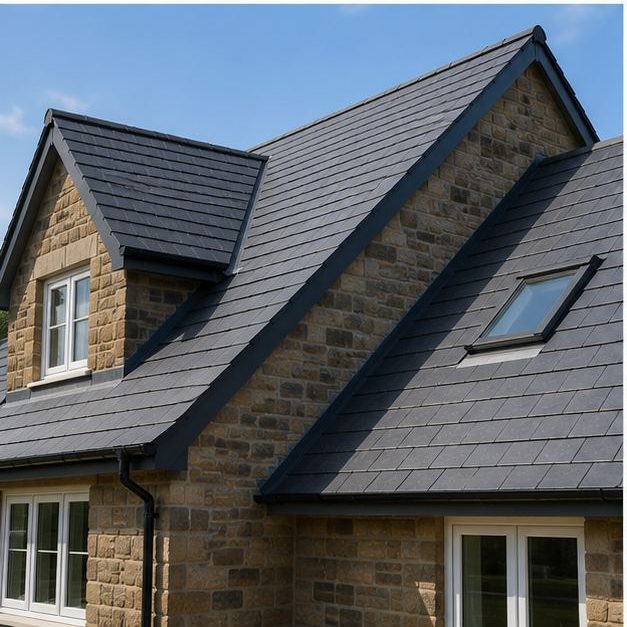
Mechanical fixing addresses this directly by securing tiles with nails, clips or a combination of both at a frequency that matches the level of exposure the roof actually faces, rather than a minimum standard applied everywhere regardless of conditions. Rather than relying on gravity and friction to hold everything down, every tile, or a carefully calculated proportion of them depending on their position on the roof, is positively fixed to the roof structure. This is a standard part of a properly specified new roof rather than an optional extra, and it makes a genuine difference on properties around Nailsea that face more open ground, elevated positions or long, unbroken exposure to prevailing winds.
The right level of fixing depends on the specific site rather than a blanket rule applied without thought. A cottage set within a row of similar buildings in the older part of Nailsea may need a different fixing specification to a detached house standing on its own plot on a more recently built estate, simply because the two properties experience wind very differently. Roof pitch, tile weight, height above ground and the local terrain all feed into how fixings are calculated, which is why this is assessed on a house-by-house basis rather than assumed from the outset based on general guidance alone.
It is worth remembering, too, that fixings are effectively invisible once a roof is finished. Two roofs can look completely identical from the pavement, with the same tile colour and profile, while one has been fixed to withstand serious wind loading and the other has not. This is precisely why the specification stage matters so much more than it might seem: the difference only becomes obvious years later, during the storm that the under-fixed roof was never really prepared for, by which point putting it right means going back up and starting again.
Brunel Roofing Bristol fixes tiles to the level genuinely required by each roof's exposure, working out the correct specification from the actual conditions the building faces rather than applying the minimum that regulations allow and hoping it proves sufficient over time.
If your current roof has lost tiles during storms in the past, that history is worth mentioning when you get in touch, since it often points directly to a fixing specification that was never quite adequate for the conditions your home actually experiences, and a new roof gives the chance to put that right for good.
Get a Free Quote for New Roof Installations in Nailsea
Every roof is different — the fastest way to get an accurate answer is a quick chat with our team.