
Eastville's mix of Victorian terraces and later inter-war semis means roofs of very different ages and constructions all along the same streets, and each responds differently when a spell of severe weather passes through. After a bad storm, some of the most frequent call-outs involve tiles that have slipped or cracked, ridge and hip tiles worked loose by gusting wind, and flashing around chimneys that has lifted or torn away from the brickwork. Understanding which of these problems tend to recur locally can help homeowners know what to look for once the weather has calmed.
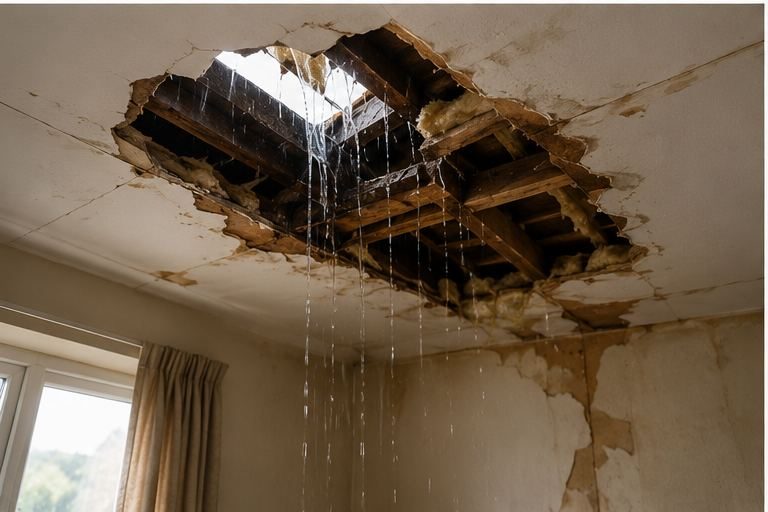
Slipped or missing tiles are usually the first sign that a roof has taken a battering. Wind can work individual tiles loose over years before a single severe gust finally dislodges them, and once one tile has gone, the surrounding tiles and the underlying felt are left more exposed to whatever weather follows. On many older roofs in the area, the nails or clips holding tiles in place have simply weakened with age, which is why storm damage often seems to affect roofs that were otherwise in reasonable condition.
Ridge and hip tiles sit along the most exposed lines of a roof and are frequently the first to move in high winds, especially where the mortar bedding them in has started to crumble. A loose ridge tile might not fall immediately, but it can rock in the wind and let water track in underneath, causing a leak that only becomes obvious once it has already reached the loft space. Flashing, particularly around chimneys, is another common weak point across properties in Eastville, since it relies on a continuous seal that even a small storm can disturb.
Roof valleys, where two roof slopes meet, are natural channels for rainwater and correspondingly vulnerable during heavy downpours. Debris such as leaves and small branches can collect here even outside of storm conditions, and a valley that is already partially blocked is far more likely to overflow or force water under adjacent tiles when rain is especially heavy. Flat-roofed extensions, common on rear additions in the area, bring their own issues too, as felt can split or blister under wind uplift and ponding water.
Not every problem is visible from the ground, which is part of why storm damage can go unnoticed until a leak appears indoors, sometimes some distance from where the actual entry point sits on the roof. A proper inspection after severe weather, ideally from someone able to access the roof safely rather than relying on a look from the garden, is the only reliable way to know the full extent of any damage.
If your property in Eastville has been through recent bad weather and you are unsure whether anything needs attention, Brunel Roofing Bristol offers free inspections and can advise honestly on what, if anything, needs doing. Catching a small problem early is almost always more straightforward than dealing with the consequences of it being left through another spell of rain.
Need Emergency Roof Repairs in Eastville?
Every case is different — the fastest way to get an accurate answer is a quick chat with our team.