
Roof edges, particularly verges along gable ends, take a disproportionate amount of punishment during high winds compared with the main field of a roof. On many older properties in Eastville, these edges were originally finished with a simple mortar bedding, which becomes brittle with age and is exactly the kind of detail that a strong gust can crack or dislodge in a single storm. Because verges sit at the very edge of the roof structure, they also tend to catch the full force of wind blowing across open gardens or streets, rather than being sheltered by neighbouring roof slopes the way much of the rest of the covering is.
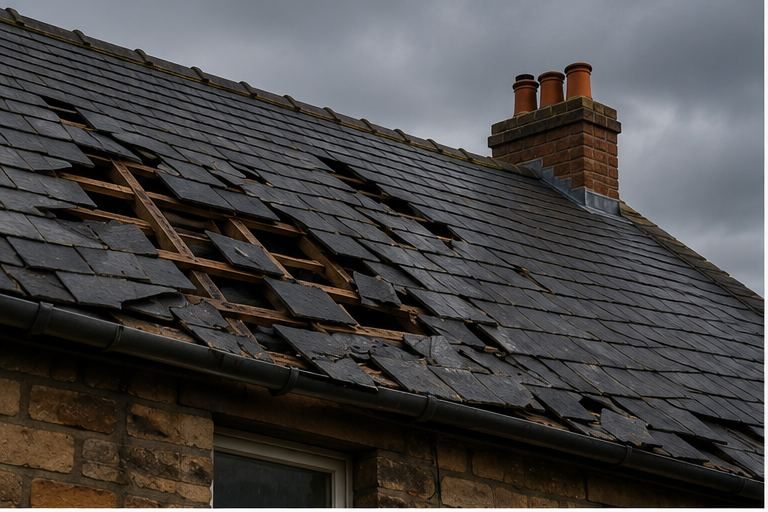
Wind does not need to be exceptionally severe to cause this kind of damage, particularly where a verge has already been weakened by years of small movements and weathering. Once the seal along an edge has been compromised, wind-driven rain can get behind the tiles nearest the edge far more easily, leading to damp patches near the eaves or gable wall inside the loft that may not appear until well after the weather that caused them has passed. A verge tile that rattles slightly in a strong gust, or mortar that has visibly begun to crumble away in small pieces, are both early signs that the bedding is failing and worth acting on before a more serious gust finishes the job.
A dry verge system, using interlocking plastic or GRP components rather than mortar, is a more modern and generally more wind-resistant alternative that many homeowners choose when repairing this kind of damage, since it removes the reliance on a mortar joint that can crack again in future weather. It is not always necessary for every property, but it is worth discussing as an option where verge damage has become a repeated issue on a particular roof, particularly on a gable end that faces the prevailing wind.
Edge damage on taller properties, including some of the Victorian terraces found across Eastville, can be harder to assess safely from ground level, since the angle and height make it difficult to judge the extent of cracking or displacement without getting close. This is one of the reasons a proper inspection, rather than a look from the garden, is the only reliable way to know whether a repair is needed and how extensive it might be. Where scaffolding is already in place for other work, it is often sensible to have the verges checked at the same time, since access at height is one of the more significant costs involved in dealing with edge damage on its own.
Left unaddressed, damaged roof edges tend to get worse with each subsequent spell of wind rather than staying static, since loose material continues to move and further weakens the surrounding fixings. Repairing the issue while it is still contained to a small section is usually more straightforward than waiting until a larger area has been affected.
If you have noticed cracked mortar, displaced tiles, or damp patches near a gable wall in your Eastville home, it is worth having the roof edges checked properly. Brunel Roofing Bristol can inspect and advise on the most appropriate repair, whether that means re-bedding existing tiles or moving to a more resilient dry verge system.
Need Emergency Roof Repairs in Eastville?
Every case is different — the fastest way to get an accurate answer is a quick chat with our team.